


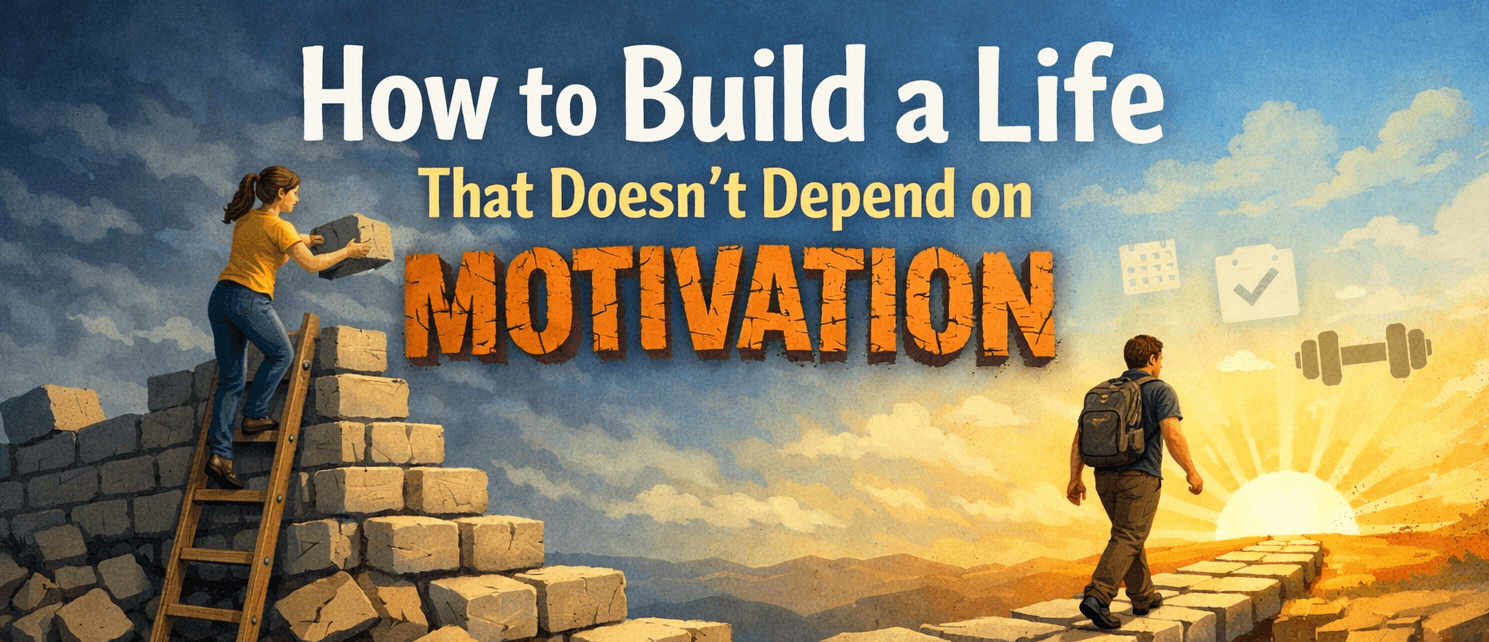
… and Why Most People Give Up!
Most people give up because they chase motivation rather than build structure. They wait for energy, inspiration, or the “right mood” to show up before they act. But life doesn’t reward occasional bursts of enthusiasm.
Motivation rewards consistency.
You don’t need more motivation. You need fewer daily decisions. The more you simplify and systematise how you live, the less mental friction you face. When your days have shape, you stop negotiating with yourself every morning.
Most people wake up already mentally exhausted, trying to decide what matters today, what to prioritise, and what to ignore. They burn their energy before they’ve even begun. A steadier approach is to decide in advance. When you know the basic structure of your day, your routines begin to carry you forward instead of needing to be forced.

Another reason people give up is unrealistic expectations. They assume meaningful change should happen quickly. They expect visible results before habits have had time to take root. They forget that there is always a delay between effort and payoff.
Real progress is quiet at first. You’re laying foundations that aren’t immediately visible. If you’re not prepared for that silence, it’s easy to mistake it for failure. A more sustainable approach is to measure what you control: showing up, practising the habit, and honouring your commitments. Progress begins there. Outcomes follow later, often all at once.
Comparison is another common trap. People look at others’ outcomes and forget how long it took to build those results. They compare their early steps to someone else’s highlight reel and conclude they’re behind.
Most meaningful progress is unglamorous. Most breakthroughs look boring while they’re happening. Instead of measuring yourself against someone else’s timeline, measure yourself against yesterday. Ask whether you showed up with slightly more clarity, patience, or follow-through than before. That’s how growth compounds.
Many people also believe that improvement should be linear. When they hit a setback, they assume something is wrong. A bad week becomes evidence that the whole approach has failed.
But building a meaningful life is rarely smooth. It includes pauses, restarts, and recalibration. One misstep doesn’t erase progress. A slow period doesn’t mean the path is broken. Instead of treating setbacks as reasons to quit, treat them as feedback. Zoom out. Look for patterns. Adjust without abandoning what matters to you.
Overwhelm causes more people to stop than lack of ability. Trying to change everything at once spreads energy too thin. Growth doesn’t come from doing more. It comes from doing fewer things with intention and consistency.
Motivation Contributors
Focus creates momentum. Choose a few habits, priorities, or commitments and give them your full attention. Let stability come before expansion. Sustainable growth always beats frantic effort.
Fear also plays a quiet role. Fear of failing. Fear of being seen. Fear of discovering you’re capable of more than you thought. It often disguises itself as procrastination, perfectionism, or indecision.
The way forward isn’t to eliminate fear, but to move with it. Act before you feel ready. Learn by experience rather than waiting for certainty. Confidence is built through action, not preparation.
People who endure don’t expect life to be easy. They plan for boredom. They accept that some days will feel flat or unrewarding. They show up anyway. What makes consistency easier over time is identity—when your habits align with who you believe yourself to be. When follow-through becomes part of how you see yourself, quitting starts to feel unnatural.
Finally, many people struggle in isolation. They assume everyone else has it figured out and carry their doubts alone. That quiet loneliness erodes momentum.
Connection matters. Being around others who are also growing, struggling, and adjusting reminds you that difficulty is not failure—it’s participation. Sharing the process lightens the load and restores perspective.
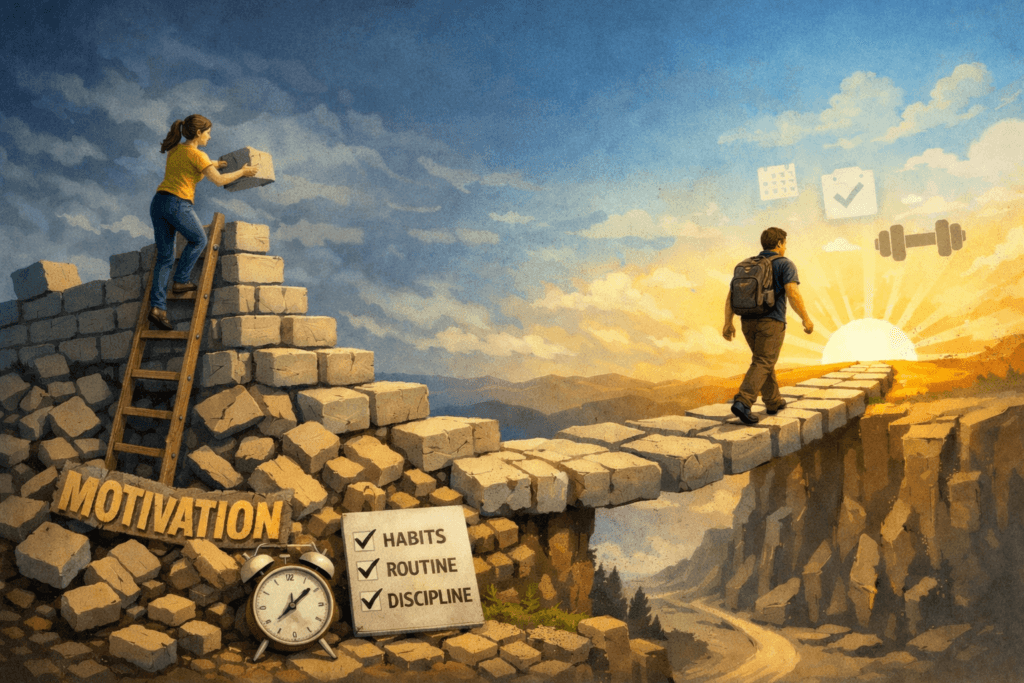
A steady life isn’t built on mood or willpower. It’s built on systems, self-trust, and a pace you can sustain. Focus on the next right step, not the next dramatic win. Keep small promises, especially on the days it would be easier not to.
Over time, those small actions create something durable. Not because you never felt like giving up—but because you didn’t let that feeling make the decision for you.
If you want to make a positive change and want to create your own blueprint for moving past “hustle culture” and into a state of sustainable, unshakable momentum, check out our free guide, The Architecture of High-Performance Living and get started today!
This post may contain affiliate links. As an Amazon Associate, we earn from qualifying purchases. See our Privacy Policy for details.

