


In this edition of Let’s Talk, we look at Turning Resentment Into Calm Understanding
Prefer to listen? Check out the Audio version below:

This lesson focuses on transforming feelings of resentment into calm understanding when faced with uneven compromises in your life.
Included are 9 tips for emotional regulation, 3 actionable steps to practice, and further reading to deepen your knowledge.
Top Tips
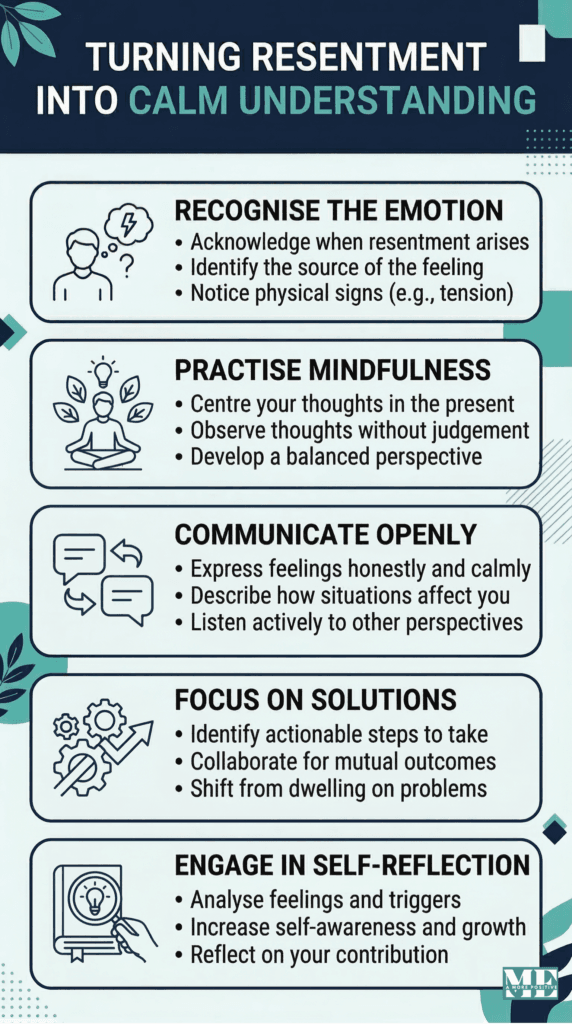
Recognise the Resentment Emotion
The first step in managing resentment is to recognise and acknowledge the emotion. This involves identifying when resentment arises, understanding why it occurs, and knowing its impact on your well-being. Accept that feeling resentful is a natural reaction to perceived unfairness. Notice the physical and emotional signs, such as tension or frustration, and label the emotion accurately. By identifying these feelings, you pave the way for healthier emotional expression and understanding.
Practice Mindfulness
Mindfulness can help reduce the intensity of resentment by keeping you grounded in the present moment. Begin with short meditation sessions to centre your thoughts and focus on the present. Observe your thoughts without judgment and let go of negative emotions. Mindfulness promotes a balanced perspective, allowing you to manage your feelings before they escalate. By practising regularly, you can better control your responses to difficult situations and find inner peace.
Communicate Openly
Open communication is crucial when dealing with resentment from uneven compromises. Express your feelings honestly and calmly to those involved, describing how the situation affects you. This approach creates an opportunity for dialogue and mutual understanding. Listening actively to the other person’s perspective can also foster empathy and reduce friction. By sharing feelings constructively, you’re more likely to reach a resolution that alleviates resentment and promotes cooperation.
Focus on Solutions to Resentment
Shifting your focus from problems to solutions can mitigate feelings of resentment. Begin by identifying actionable steps to address the issues causing imbalance. Collaborate with others to find mutually beneficial outcomes. This proactive approach not only resolves the immediate problem but also strengthens relationships. Emphasise problem-solving over dwelling on what went wrong. By taking constructive steps, you empower yourself to regain a sense of control and reduce emotional strain.

Set Realistic Expectations
Having clear and realistic expectations can prevent resentment from arising. Avoid setting high and potentially unmet expectations in compromised situations. Understand what you can control and adjust your outlook accordingly. Being realistic helps manage disappointments and lessens the emotional burden. Aligning your expectations with reality lets you handle uneven give-and-take scenarios more calmly. Over time, adopting this mindset fosters forgiveness and tranquillity.
Cultivate Empathy Not Resentment
Empathy plays a significant role in easing resentment. Try to see the situation from the other person’s perspective, considering their challenges and feelings. Recognising the reasons behind their actions softens your response and increases compassion. Empathy can bridge gaps in understanding and lead to a more positive interaction. As you identify with others’ emotions, your ability to forgive and move past resentment improves significantly. Empathy, therefore, becomes a vital tool in maintaining harmony.
Seek Professional Support
If unresolved resentment severely impacts your life, seeking professional support can be beneficial. Therapy provides a safe space to explore emotions and develop healthy coping strategies. A professional can guide you in understanding deep-seated issues and offer techniques to enhance emotional regulation. Therapy empowers you to face and resolve conflicts constructively. Remember, seeking help is a strength, not a weakness, and can lead to lasting positive changes in managing resentment.
Engage in Self-Reflection
Self-reflection is key to transforming resentment into understanding. Take time to analyse your feelings and the events that triggered them. Reflect on your contribution to the scenario and consider alternative ways to handle it. This process increases self-awareness and personal growth. By understanding your emotional patterns, you equip yourself with the tools to address similar situations in the future. Regular reflection ensures ongoing improvement in emotional intelligence and resilience.
Prioritise Self-Care
Self-care is essential in managing resentment effectively. Prioritise activities that rejuvenate your mind and body, such as exercise, hobbies, or relaxation techniques. Taking care of yourself boosts emotional resilience, making it easier to handle imbalanced situations. Regular self-care reduces stress and fosters a more positive outlook. Ensure your needs are met to prevent burnout and enhance your ability to respond to life’s challenges with composure and understanding.
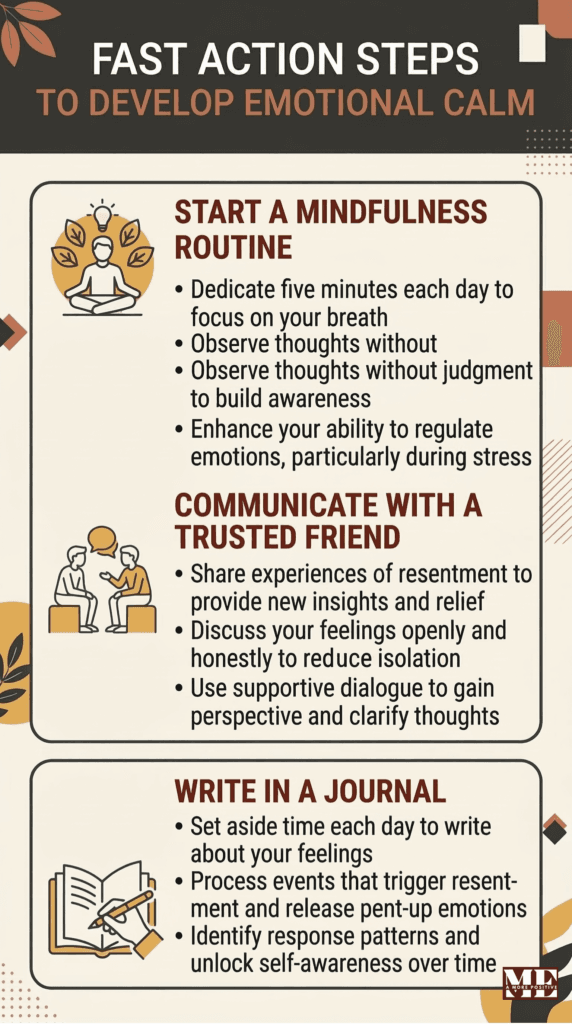
Stress Levels – Fast Action Steps
STEP 1 – Start a Mindfulness Routine
Begin incorporating mindfulness into your daily routine. Dedicate at least five minutes each day to focus on your breath and observe your thoughts without judgment. Use these moments to centre yourself and develop awareness of your emotional state. Consistent mindfulness practice enhances your ability to regulate emotions, particularly in moments of stress. As you build this habit, you’ll find it easier to remain calm and prevent resentment from taking hold.
STEP 2 – Discuss The Resentment with a Trusted Friend
Reach out to a trusted friend and discuss your feelings of resentment. Sharing your experiences can provide new insights and relief. Be open and honest about the emotions you are dealing with, and listen to any advice they may offer. This supportive dialogue can help you gain perspective and feel less isolated. By articulating your thoughts, you’ll also clarify them for yourself, making it easier to address underlying issues effectively.
STEP 3 – Write in a Journal – Think About The Resentment
Journalling is a powerful tool for processing emotions like resentment. Set aside time each day to write about your feelings and the events that trigger them. This practice not only releases pent-up emotions but also helps you identify patterns in your responses. Journalling allows for reflection and self-discovery, unlocking insights into your emotional world. Over time, this routine can lead to greater self-awareness and improved emotional regulation, paving the way for understanding.
Further Reading
● The Dance of Anger by Harriet Lerner
● Radical Acceptance by Tara Brach
● Emotional Intelligence by Daniel Goleman
● The Gifts of Imperfection by Brené Brown
● Daring Greatly by Brené Brown