


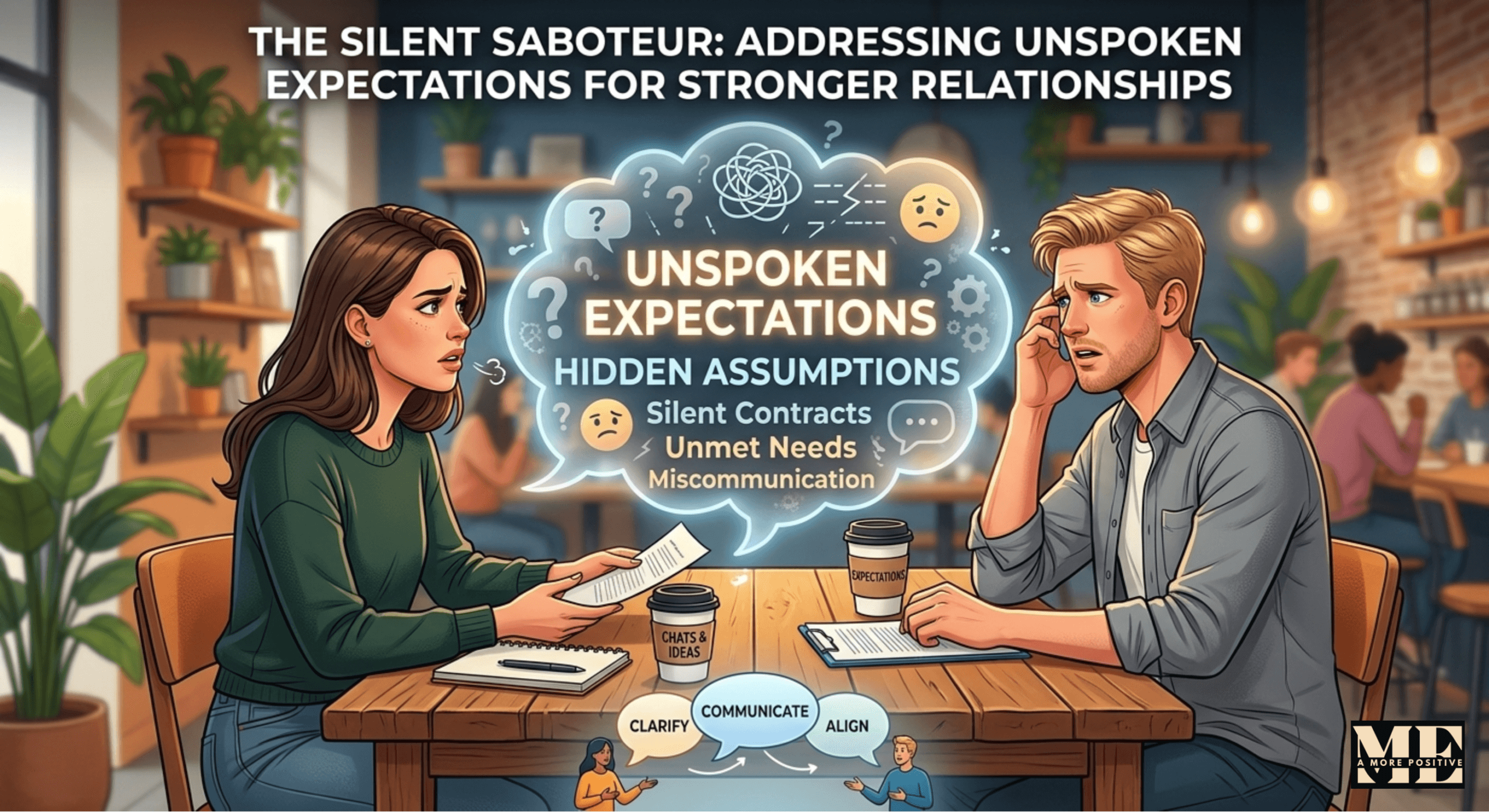
It’s happened to the best of us: You’re fuming because a colleague didn’t loop you into a project, or you’re hurt because your partner didn’t realise you needed a hand with the dishes. You feel let down, but here’s the kicker—you never actually asked for what you needed. These unspoken expectations can cause major issues.
We often navigate our lives guided by a series of “invisible contracts.” These are the unspoken expectations we carry around like a secret rulebook, assuming everyone else has a copy. When people inevitably break a rule they didn’t know existed, resentment starts to simmer. If we want to build relationships that actually work, we have to start by bringing those hidden assumptions to light.
The Stealth Mode of Unspoken Expectations
Unexamined assumptions are sneaky. They don’t usually show up as loud demands; they hide in the background of our everyday interactions. In a professional setting, this often looks like the “I thought they knew” trap. You assume your manager understands your long-term career goals without you ever having a formal sit-down. When you get passed over for a promotion, the disappointment is crushing.

The problem is that when expectations aren’t articulated, everyone involved is operating on a different frequency. You’re playing jazz while your team is playing classical. This misalignment doesn’t just hurt productivity; it erodes trust. You start to feel undervalued, while the other person is likely completely oblivious that there’s even a problem.
Why We Stay Silent
Why do we do this to ourselves? Often, it’s because we want to be “mind-readers” or we want others to be. There’s a romanticised idea that if someone truly cares about us—or if a colleague is truly competent—they should just know what we need.
In reality, expecting someone to guess your needs is a recipe for a headache. It’s much more effective (and far less exhausting) to recognise that your perspective is unique to you. What seems like “common sense” to you might be a totally foreign concept to the person sitting across from you.
Spotting the Red Flags From Unspoken Expectations
So, how do you catch these assumptions before they blow up? The best indicator is usually your own mood. If you find yourself feeling frustrated, slighted, or inexplicably annoyed, stop and ask yourself: “What did I expect to happen here that didn’t?”
Anger is often just a mask for an unmet, unstated expectation. To flip the script, try these steps:
- Audit your “Shoulds”: Any time you think, “They should have known,” you’ve found a hidden assumption.
- The Pause Reflex: Before reacting in a moment of frustration, take a second to reflect on whether you actually communicated your requirement out loud.
- Ask, Don’t Accuse: Use open-ended questions like, “I realised I might have had a different idea of how this would go—how were you envisioning this process?”
Final Thoughts
Clear communication isn’t just about talking more; it’s about being brave enough to be specific. By identifying your own “invisible contracts,” you stop being a victim of circumstance and start being a collaborator. It takes a bit of effort to pause and reflect, but it’s a lot easier than cleaning up the mess that resentment leaves behind.
This post may contain affiliate links. As an Amazon Associate, we earn from qualifying purchases. See our Privacy Policy for details.

