



As cheese lovers around the world gear up to celebrate Cheese Lover’s Day, it’s time to address an important question: What’s the role of our diet for mental health improvement? – particularly the consumption of dairy products like cheese? While it’s true that cheese may not always be the healthiest choice, the importance of a balanced diet in supporting our mental well-being cannot be overstated.
The Food-Mood Connection
It’s no secret that what we eat directly impacts our physical health. However, emerging research suggests that our diet also plays a significant role in our mental health. The food we consume can influence our mood, cognitive function, and overall mental well-being.
When it comes to mental health, a balanced diet is key. This means consuming a variety of nutrients that support brain function and help regulate mood. While cheese may not be the first food that comes to mind when thinking about a balanced diet, it does offer some nutritional benefits.

The Nutritional Benefits of Cheese
Cheese, despite its reputation as a high-fat indulgence, contains several nutrients that are beneficial for our mental health:
- Protein: Cheese is a good source of protein, which is essential for the production of neurotransmitters that regulate mood and cognitive function.
- Vitamin B12: This vitamin is crucial for maintaining a healthy nervous system and producing red blood cells. A deficiency in vitamin B12 has been linked to mood disorders such as depression.
- Calcium: Cheese is rich in calcium, which is not only important for strong bones but also plays a role in neurotransmitter release and nerve function.
- Zinc: Zinc is involved in the metabolism of neurotransmitters and has been associated with improved mood and cognitive function.
While these nutrients can be found in other food sources as well, cheese can be a tasty addition to a well-rounded diet that supports mental health.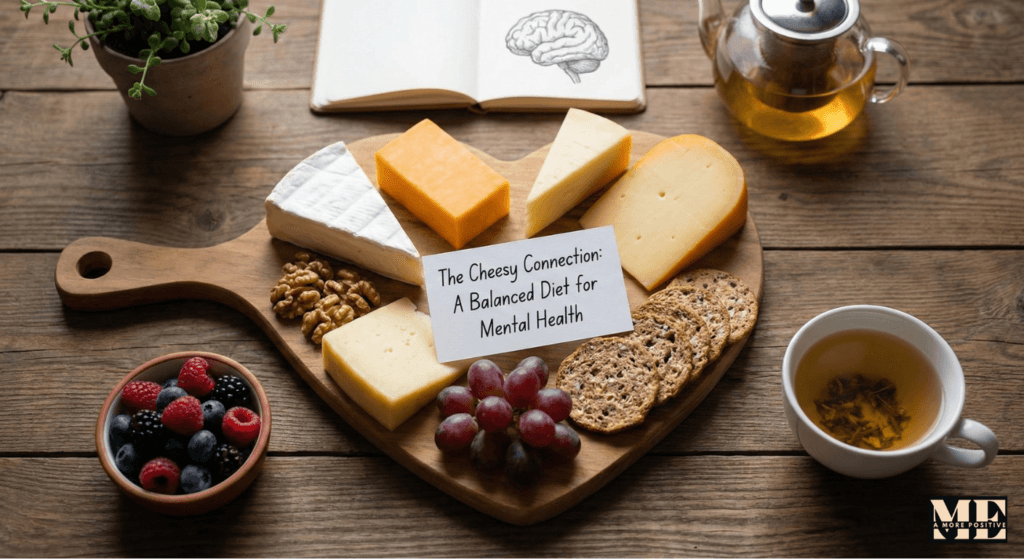
The Importance of Balance
While cheese can offer some nutritional benefits, it’s important to remember that a balanced diet is about more than just one food item. Consuming excessive amounts of cheese, or any single food for that matter, can lead to an imbalance in our nutrient intake and potentially have negative effects on our mental health.
Instead, focus on incorporating a variety of nutrient-dense foods into your diet. This includes fruits, vegetables, whole grains, lean proteins, and yes, even cheese in moderation. By doing so, you’ll ensure your body receives the nutrients it needs to support optimal brain function and mental well-being.
The Role of Moderation
When it comes to enjoying cheese, moderation is key. Indulging in a cheesy treat every now and then can be a delightful experience, but it’s important not to overdo it. Too much cheese can contribute to weight gain, high cholesterol levels, and other health issues that may indirectly impact our mental well-being.
So, on Cheese Lover’s Day, go ahead and savour that slice of your favourite cheese. Just remember to balance it out with a variety of other nutritious foods to support your mental health in the long run.
Conclusion
While cheese may not be the hero of a perfectly balanced diet, it does have its place in supporting mental health when consumed in moderation. Remember, a balanced diet is about incorporating a variety of nutrient-rich foods that provide the necessary building blocks for optimal brain function and overall well-being. So, let’s celebrate Cheese Lover’s Day with a cheesy smile, knowing that a little indulgence can be part of a healthy, balanced lifestyle.
This post may contain affiliate links. As an Amazon Associate, we earn from qualifying purchases. See our Privacy Policy for details.